Kudzu & Coyotes: On Missouri's Invasive, Nuisance, & Migratory Species

Don't feel like reading? Listen instead 🎧
Occasionally, a coyote pack passes through the woods surrounding my house. I’m ecstatic when the canids’ yips rip through the night. A “nuisance” species where I live, coyotes are always around; but I only get to hear them or see them when they want me to.
Every spring, hundreds of hummingbirds flock to the porch my dad built. They remain flitting distance from the hanging sugar water my parents supply them with until October. Only after they’ve consumed every last drop of summer will they begin their journeys back to warmer swaths of the Americas.
Throughout the year, resident and migratory Canada geese make themselves at home in nearby bodies of water. I’ve been welcoming them since I was a kid, when they frequently found refuge in the pond behind my childhood home. Once, when my grandpa asked me to destroy their eggs, I hid them instead.
I love Missouri and Missouri’s native species, but I’m learning more and more each day how much my adoration for my little corner of the world is nurtured by plants and animals that the Missouri Department of Conservation defines as “invasive,” “nuisance,” or “migratory” species.
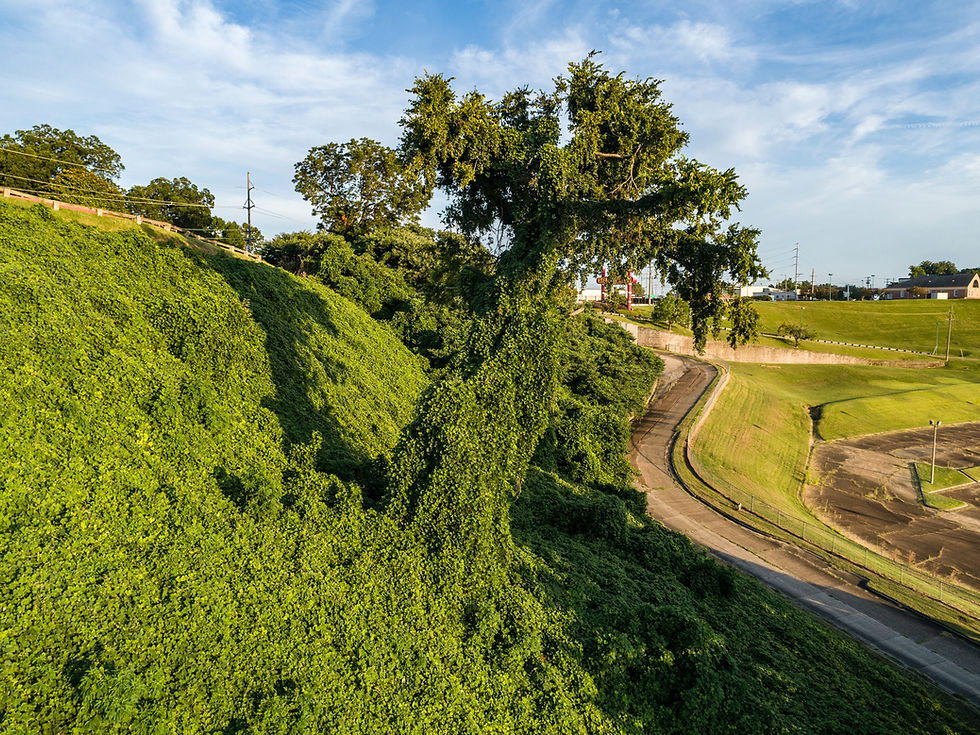
The kudzu vines climbing all over Missouri were brought here from Asia. Some of Missouri’s most enchanting honeysuckle species came from Asia and Eurasia. Missouri’s Mimosa — my favorite flowering tree, and a tree whose fluffy, pink blossoms look like they belong in a Dr. Seuss' book — came from Asia as well.
Before colonization and farming reshaped the landscape, the parts of Southeast Missouri that weren’t forest or field were swamp. Now, only pockets of protected land retain the region’s historic look. They also act as a safe space for swamp-dwelling animals such as the swamp darter and the alligator snapping turtle, two species that are presently labeled “of conservation concern” by the Missouri Department of Conservation.
I treasure Southeast Missouri’s protected natural areas; I’ve been visiting our ancient swamps since I was a little girl, and visiting them feels like glimpsing a prehistoric past. I’m also glad kudzu thrives here, because the hungry vine adds a lushness to Missouri’s natural backdrop that is a joy to behold. I’m grateful our swamp species have a sanctuary, and I’m happy that efforts to eradicate Missouri’s “nuisance species” have only caused the life forms to find new ways to survive and thrive.
My family line has been surviving and thriving in Missouri for a long time, and we’ve been living in the United States for even longer. I have loved ones who are newer to the country, however, and I worry about them being deemed “invasive,” “nuisance,” or “migratory” species now more than ever.
Recently, a loved one of mine with Latin American heritage was driving home when they were called a racial slur and told they should be deported. They’re afraid to leave their house. Two of my young loved ones have a foreign father, and if the current political climate doesn’t improve, I’m concerned they could someday be bullied by their peers or targeted by government officials for their parentage.
It can be easy for some Americans to forget that the majority of us who call the United States home aren’t truly native to the ecosystems we inhabit. That, in fact, our ancestors could be accurately categorized as invasive species, and we could be accurately categorized as nuisance species. This country is only our home because our ancestors made it so, often through violence and destruction.
In nature, a forced monoculture usually leads to species loss and failing ecosystems. Biodiversity is a hallmark of a healthy ecosystem; in modern times, diversity — and the celebration of diversity — can be a hallmark of a healthy society.
I don’t live in a healthy society, and I don’t know what one person can do to halt the seemingly endless flow of violence, cruel detention practices, wrongful detentions, and wrongful deportations sweeping the United States; but I do know the little girl who hid those goose eggs still lives in me. If all I can do is be ready and willing to help when the opportunity presents itself, I suppose that’s something.


